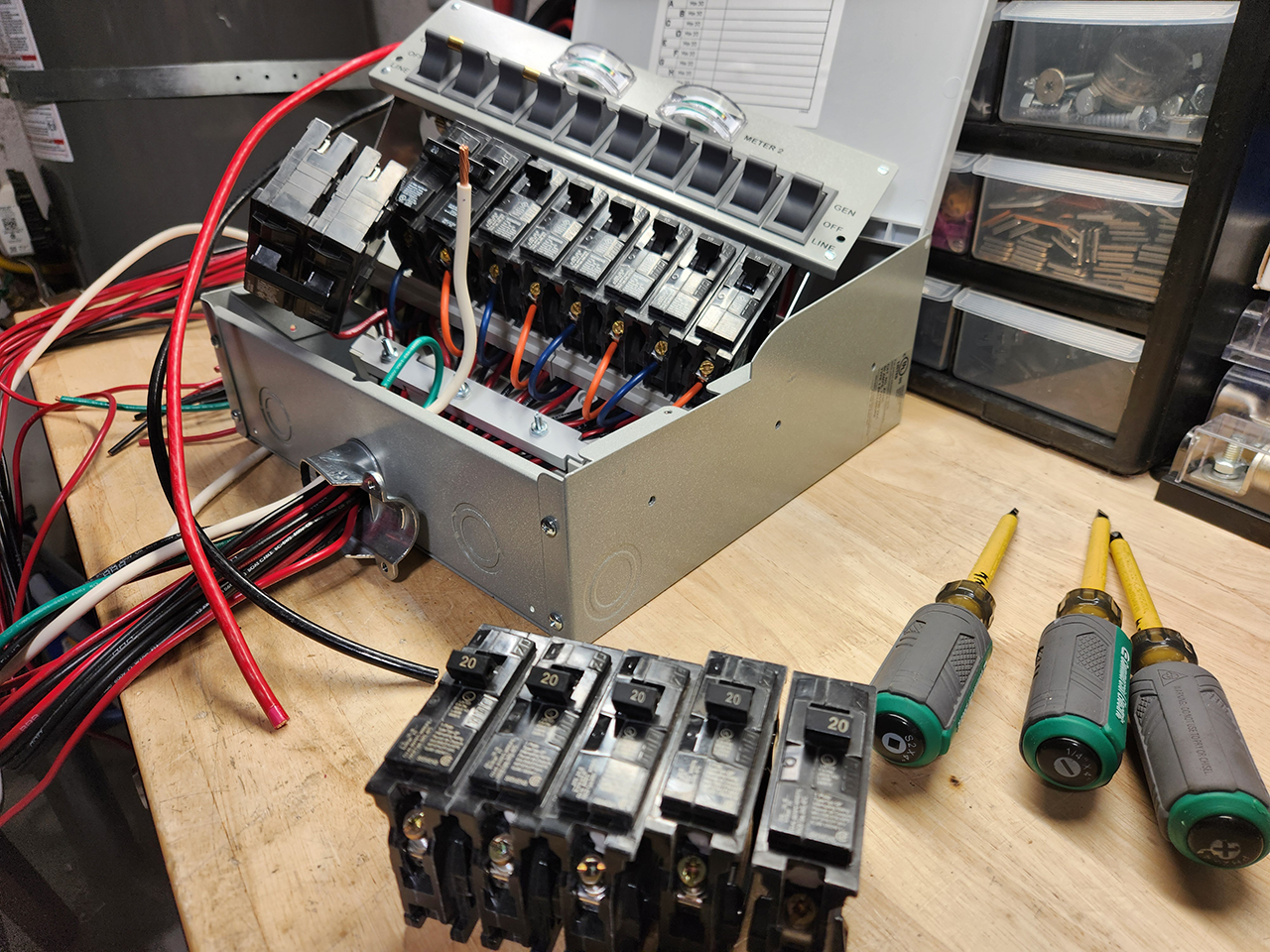
Whether you have a backup generator, a solar power station, or a full off-grid setup, you still need a way to actually use that power in your home. I chose the Reliance Protran2 (A510A model) to bridge that gap. This indoor manual transfer switch includes power meters and an inlet port, letting you switch up to 10 circuits over to backup power safely. Most importantly, it eliminates the danger of back-feeding the grid during an outage.
Beyond emergency use, this transfer switch also allows me to maximize my solar production. I can now utilize my own generated power 24/7, rather than relying on it only during an outage.
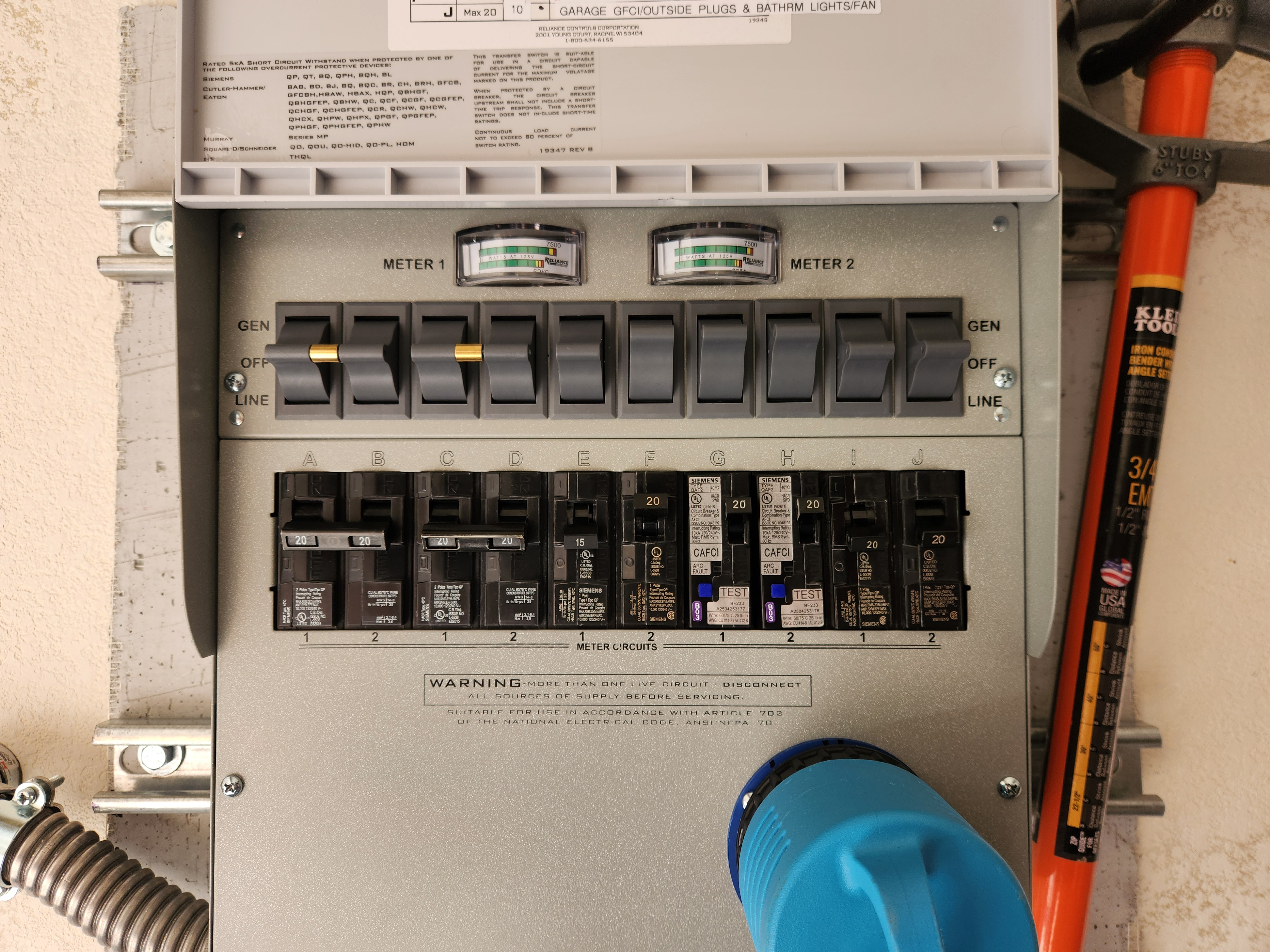
Below, I've broken down the common hurdles you'll face when installing a transfer switch. I cover everything from the basic product overview and mounting to wiring standard circuits, load balancing and bonding. I also dive into the more advanced topics like the dreaded shared neutrals (Multi-Wire Branch Circuits) and dealing with AFCI circuits.
Just a quick heads-up: I am NOT an electrician. I'm just a dedicated DIY-er who loves this stuff!
MTS VS. Generator Inlet
Use a generator inlet with a lockout/interlock kit for cost-effective, whole-panel backup (portable generators) when you can manage loads manually and only need backup power during an outage. Choose a manual transfer switch for safer, easier management of specific circuits or if you want to power certain loads all the time. Interlocks work on the supply side (main panel) while transfer switches, depending on the type, can operate on the load side (per circuit) or supply side. watch the full video here
Load Balancing
Load balancing a generator is essential to prevent severe overheating, damage to electrical components, and premature generator failure by ensuring an even distribution of power across phases. Proper balancing optimizes fuel efficiency, maintains steady voltage, prevents nuisance breaker trips, and ensures the generator operates reliably within its designed capacity.
Unbonded Power Source
Using an unbonded (floating neutral) power source with a Reliance Controls ProTran2 manual transfer switch is critical to prevent creating a parallel neutral path, which can cause neutral current to flow through the ground wire. This condition can lead to electrical shock hazards, improper operation of safety equipment, and potential damage to modern inverter generators or portable power stations. watch the full video here
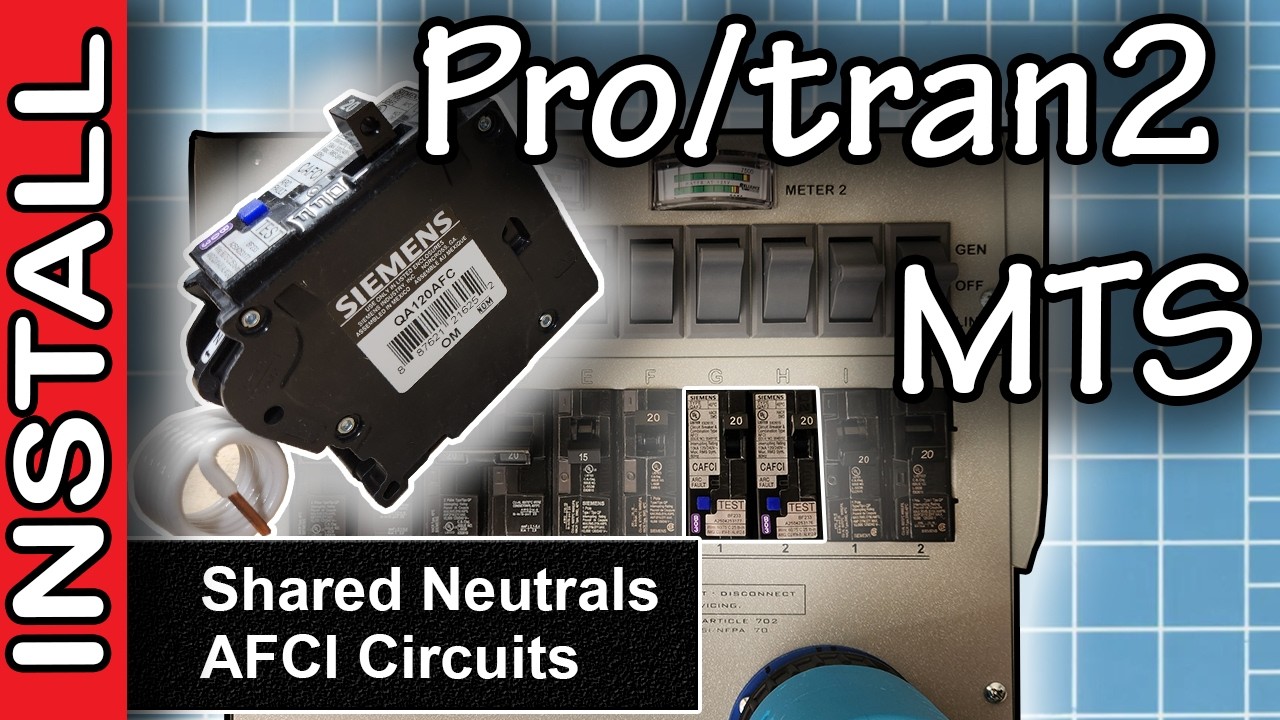
Arc-Fault Circuit Interrupters (AFCIs)
AFCI's are specialized circuit breakers designed to prevent electrical fires by detecting unintended arcing caused by damaged or loose wiring They are required in living areas, including bedrooms, family rooms, and hallways.
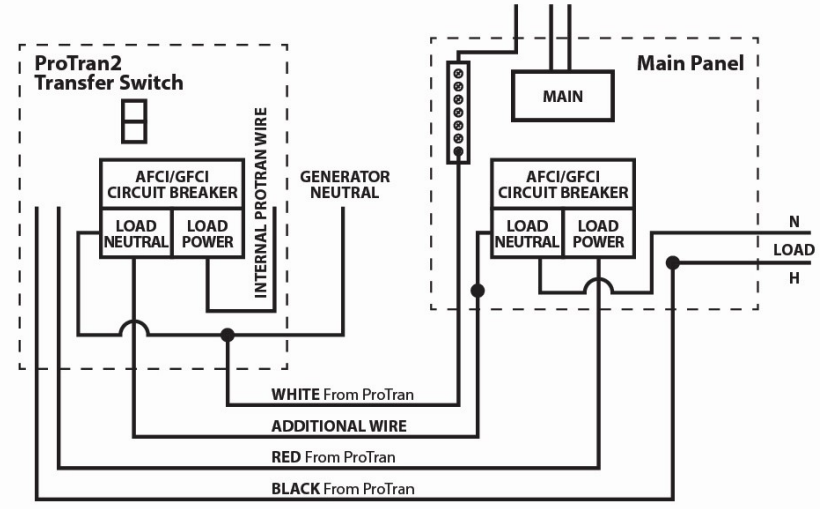
Reliance requires the neutral to be wired in series between the two AFCI breakers. This requires installing "pigtail" AFCI breakers in the MTS and connecting the load neutral output (MTS) to the neutral input (pigtail) wire on the AFCI breaker in the main service panel. You can watch the full video here to see how the AFCI circuits are wired.
The following diagram shows how to wire the AFCI circuits.
Shared Neutrals (MWBC's)
Multi-Wire Branch Circuits are probably the most mis-understood types of circuits found in homes. I didn’t even know I had them until I started on this project. If not understood fully, they can be dangerous, so make sure you know how to identify them before working any MWBC. Here is how my breaker panel was done when by house was built. It is defiantly not up to today's code standard.
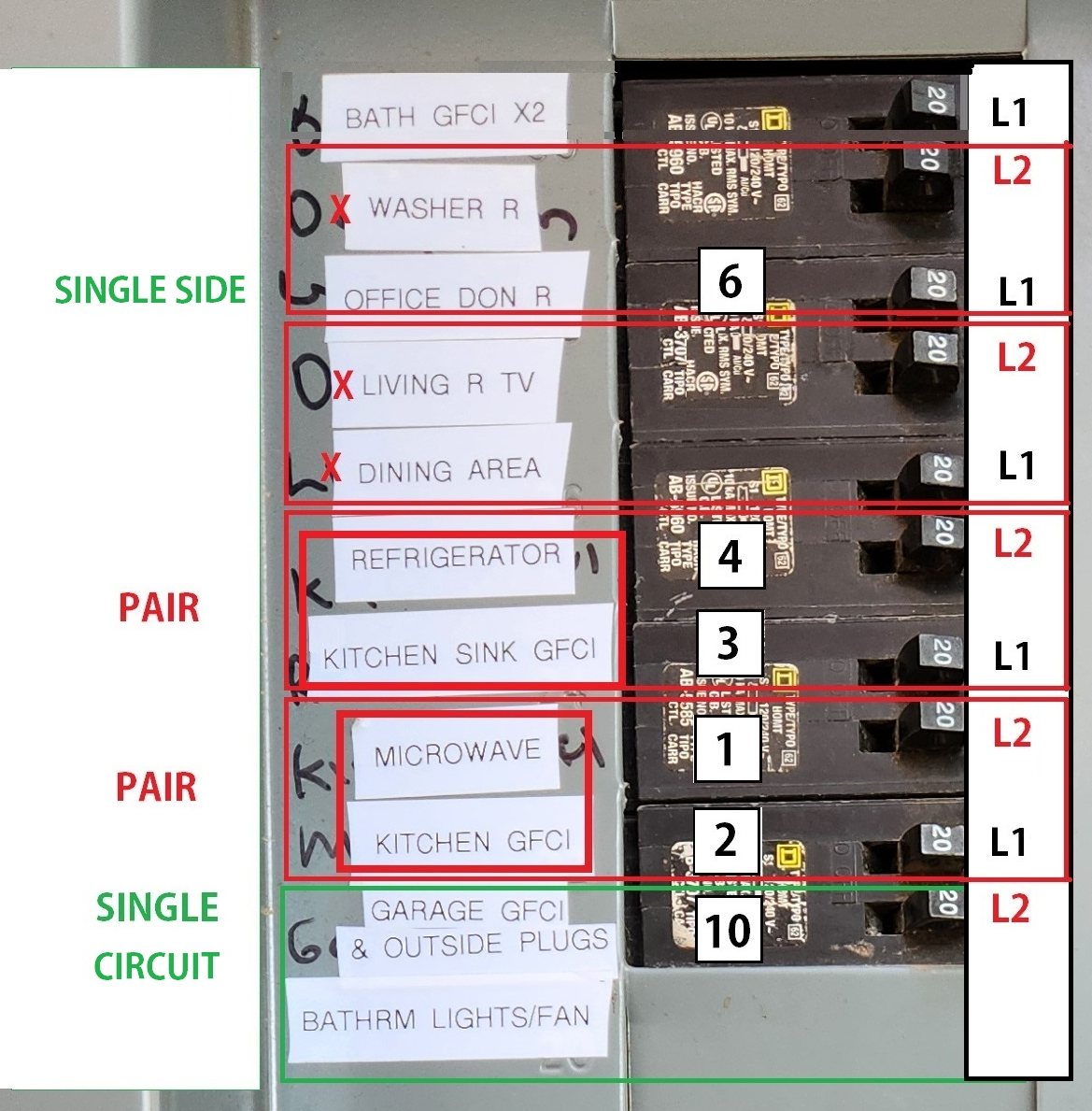
The MWBC circuits are wired using single-pole TANDEM breakers. This is confusing and dangerous. I took this opportunity to fix the issue on the MTS side by installing double pole common-trip breakers for each Multi Wire Branch Circuit. You can watch the full video here how I solved this problem.